Sweet Christmas Wishes: A Designer’s Craft Fair Review
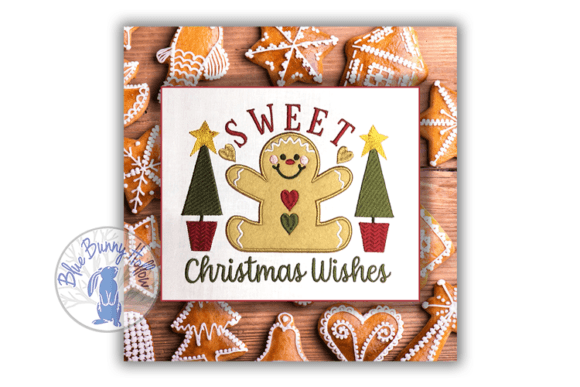
As an experienced embroidery designer, I approach every new machine embroidery design with a critical eye. It is not just about whether the digital preview looks pretty; it is about how that design translates into a tangible handmade product that sells. This season, I spent time evaluating Sweet Christmas Wishes, a festive motif featuring a cute gingerbread boy flanked by Christmas trees topped with gleaming gold stars. My goal was to determine if this design has what it takes to anchor a successful weekend craft fair booth or boost sales for an online Etsy seller.
First Impressions and Visual Appeal
The immediate impression of Sweet Christmas Wishes is one of warmth and traditional holiday charm. It does not try to be overly modern or minimalist. Instead, it leans into the cozy, nostalgic aesthetic that dominates the holiday market. The composition is balanced, with the central gingerbread figure providing a focal point that draws the eye, while the flanking trees create a natural frame. For a craft fair product, this symmetry is crucial. It reads well from a distance, which is vital when customers are walking past your table.
The description mentions "gleaming gold star," which suggests the use of metallic thread. In person, this element adds a premium touch. When light hits the metallic thread, it creates movement and sparkle, elevating the perceived value of the item. This is not just a flat image; it has texture and depth. For boutique makers, this distinction between a basic print and a textured embroidery file is where the profit margin lives.
Product Versatility for the Holiday Market
To maximize return on investment, a design must be versatile. I tested Sweet Christmas Wishes mentally against several common small shop product categories. Here is how it performs across different mediums:
- Tote Bag Design: This is perhaps the strongest application. Placed centrally on a canvas tote, the design becomes a statement piece. The horizontal spread of the trees and gingerbread boy fits standard hoop sizes well, making it a practical choice for batch production.
- Apron Embroidery: Positioning this on the bib of a kitchen apron creates an instant gift item. The "sweetness" of the gingerbread theme aligns perfectly with baking and cooking holidays.
- Tea Towel Embroidery: For kitchen linens, scale is key. If the design is too large, it overwhelms the towel. However, as a lower-corner accent, it adds a touch of elegance without interfering with the towel’s function.
- Embroidered Patch: Creating iron-on or sew-on patches allows customers to customize their own jackets or bags. This expands your inventory without requiring you to stock multiple garment sizes.
- Pillow Covers: A large-scale version on a neutral linen pillow cover serves as high-end home decor. The gold stars pop beautifully against cream or beige fabrics.
For those creating printable mockup assets for online listings, this design photographs exceptionally well. The contrast between the brown gingerbread, green trees, and gold stars provides clear visual separation, ensuring the thumbnail images remain crisp and inviting on mobile devices.
Production Practicality and Stitch Density
From a production standpoint, efficiency is everything during the holiday rush. Sweet Christmas Wishes appears to be designed with practical stitching in mind. However, there are critical technical considerations every embroiderer must address before launching a commercial embroidery run.
First, consider the stitch density. Gingerbread figures often utilize satin stitches for the outline and fill stitches for the body. If the density is too high, the fabric may pucker, especially on lighter materials like tea towels. Conversely, if the density is too low, the backing material might show through. I recommend testing the design on scrap fabric identical to your final product material. Pay close attention to the "gold star" areas. Metallic thread is notoriously fragile and prone to breaking. Ensure your machine tension is adjusted correctly, and consider using a top-stitch needle to reduce friction.
The hoop size required for this design will dictate your workflow. If it requires a 5x7 inch hoop, you can produce items faster than if it requires a 6x10 or larger hoop. Check the specific dimensions in the digital embroidery file documentation. For caps, the curved surface presents a challenge. The wide stance of the trees might distort on a small front panel. I would advise reserving this design for flat surfaces like totes, aprons, and pillows rather than structured hats, unless you have a large cap frame and experience with curved stitching.
Fabric and Stabilizer Selection
The success of this design also hinges on fabric texture. On thick, textured towels, fine details may get lost. On smooth cotton or linen, the definition will be sharp. Always use the appropriate stabilizer. For stretchy fabrics like tote bags made from recycled materials, a cut-away stabilizer is essential to prevent distortion over time. For woven aprons, a tear-away may suffice, but test first. Dark fabrics present another hurdle. If you plan to stitch this on navy or black, you must ensure the design includes underlay stitches that are dense enough to prevent the dark fabric from showing through the lighter thread colors.
Boosting Brand Consistency and Buyer Engagement
Using Sweet Christmas Wishes consistently across your product line strengthens your brand identity. When a customer sees the same high-quality design on a tote, a patch, and a pillow, it signals professionalism. This consistency builds trust, which is crucial for converting browsers into buyers at a craft fair or online.
The emotional resonance of the design cannot be overstated. It conveys "warmest Christmas wishes," which taps into the buyer’s desire to give meaningful gifts. Items featuring this design are not just objects; they are vessels for sentiment. This emotional connection increases buyer engagement and reduces price sensitivity. Customers are willing to pay more for a finished product that feels personal and heartfelt.
Final Designer Notes for Sellers
Before you commit to producing inventory, take these final steps:
- Verify Licensing: Confirm that your purchase of the design assets includes commercial rights. Never assume; always read the license terms provided with the embroidery file.
- Check Thread Contrast: Ensure your thread palette matches the intended look. The gold needs to shine, and the greens need to be rich. Cheap thread will dull the effect.
- Create Real Mockups: Do not rely solely on digital previews. Stitch out one sample on each type of fabric you intend to sell. Photograph these real samples for your listings.
- Review Spacing: Ensure there is adequate spacing between the elements to allow for clean trimming if making patches.
In conclusion, Sweet Christmas Wishes is a strong contender for the holiday season. It balances aesthetic appeal with production feasibility. By paying attention to technical details like stabilizer choice and thread quality, you can transform this digital design into a best-selling craft fair product that delights customers and boosts your bottom line.